
Democrats’ Rural America Gains Fuel Midterm Sweep, But Trump’s Tariff Policies Face Limited Threat
Democrats' rural America gains fueled sweeping midterm victories, giving them congressional control to scrutinize Trump's trade policies. However, executive authority and presidential veto powers limit their ability to reverse tariffs
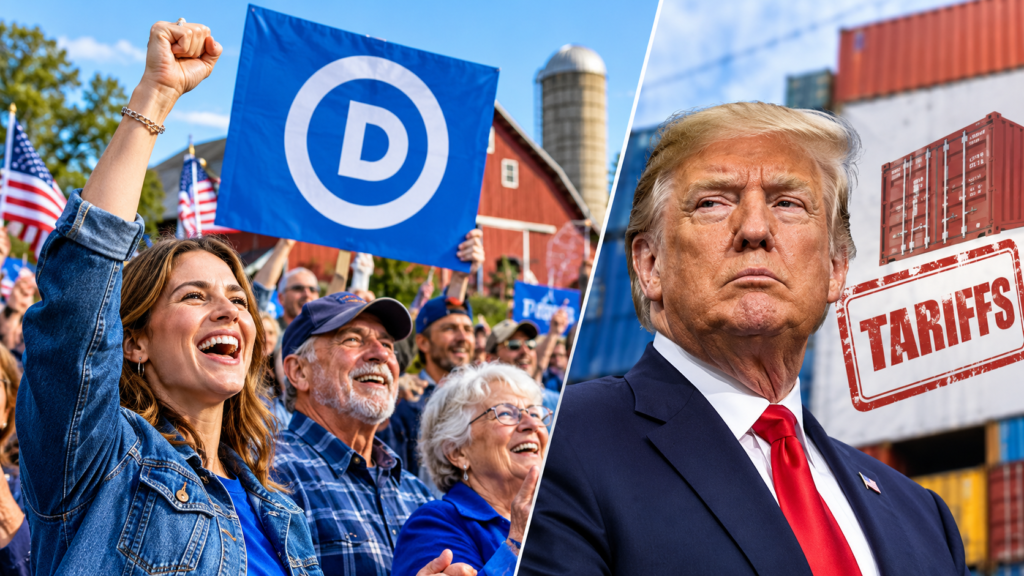
AI generated image
A surge in Democratic support across rural America helped drive the party’s sweeping victories in Tuesday’s midterm elections, delivering control of Congress and creating new opportunities to challenge President Donald Trump’s policies. However, despite their expanded legislative power, Democrats are unlikely to bring about immediate changes to the administration’s controversial tariff agenda.
The growing momentum was already visible at a Democratic Party fundraiser in Warren County, Iowa, in October 2025. The event attracted such a large crowd that local party chair Jim Culbert had to order additional pizzas after volunteers ran out of food.
“If we don’t have enough food, that’s a good problem,” he recalled telling volunteers as reported by Reuters.
The turnout provided an early indication that Democrats were beginning to regain ground in rural communities, which have traditionally supported Trump’s Republican Party. A year later, that enthusiasm translated into significant electoral gains, helping Democrats flip seats in the House of Representatives, Senate and gubernatorial races across Republican-leaning states.
The victories included rural strongholds in Iowa, Kansas, Texas and Wisconsin, where farmers have faced mounting economic pressure from Trump’s global tariff campaign and rising fuel costs linked to the Iran war.
Hispanic voters also played a significant role in the Democratic gains. Exit polls indicated that Hispanic voters in the Kansas and Texas Senate races shifted approximately 40 percentage points toward Democrats compared with the 2024 presidential election. Surveys had previously identified this voting bloc as particularly concerned about Trump’s deportation campaign and the increasing cost of living.
The election results followed a sustained effort by Democrats to rebuild their presence in rural America, where the party had gradually lost support to Republicans. Reuters’ interviews with 16 Democratic candidates, campaign staff members, political experts and strategists highlighted how the party had increasingly focused on communities it had previously overlooked.
Democratic strategists said the Democratic National Committee (DNC) pursued a broader strategy to expand the party’s electoral reach. Instead of directing most of its resources toward a limited number of battleground states, the DNC invested in state party organizations nationwide and encouraged candidates to contest every available race.
While the congressional victories give Democrats greater influence over trade policy discussions, experts caution that the change in political power is unlikely to derail Trump’s tariff measures in the immediate future.
Control of both chambers of Congress gives Democrats a powerful platform to investigate the administration’s trade decisions, hold oversight hearings and scrutinize the president’s use of executive authority. They can also use their control over government agency funding to negotiate concessions from Trump on tariffs and other policy matters.
However, Democrats are unlikely to secure enough support to override a presidential veto on legislation seeking to overturn tariffs or withdraw trade authorities granted to the executive branch.
“The swing in Congress, the results of the election, are very unlikely to have a significant impact on the president’s trade agenda and the tariffs that are in place,” Blake Harden, managing director for trade policy at Ernst & Young’s Washington Council office, told Reuters. “This is because there is so much trade authority within the executive branch that’s been delegated by Congress.”
Harden and other trade policy experts expect Democratic lawmakers to concentrate primarily on investigations and congressional hearings once they take control of trade committees. Meanwhile, trade advisers have urged clients to keep expectations in check regarding any immediate changes to Trump’s tariff policies following the election.
Democrats have also signalled interest in repealing some of the outdated trade laws that Trump has relied upon to impose tariffs. One example is Section 338 of the Tariff Act of 1930, a nearly century-old provision that had never previously been used and which the administration invoked to impose punitive duties on Canadian imports.