
Power Bank On A Flight: What Passengers Can And Cannot Do
Power banks are allowed on flights but must be carried in hand baggage and used cautiously, with airlines restricting charging, usage and storage over battery fire safety concerns.
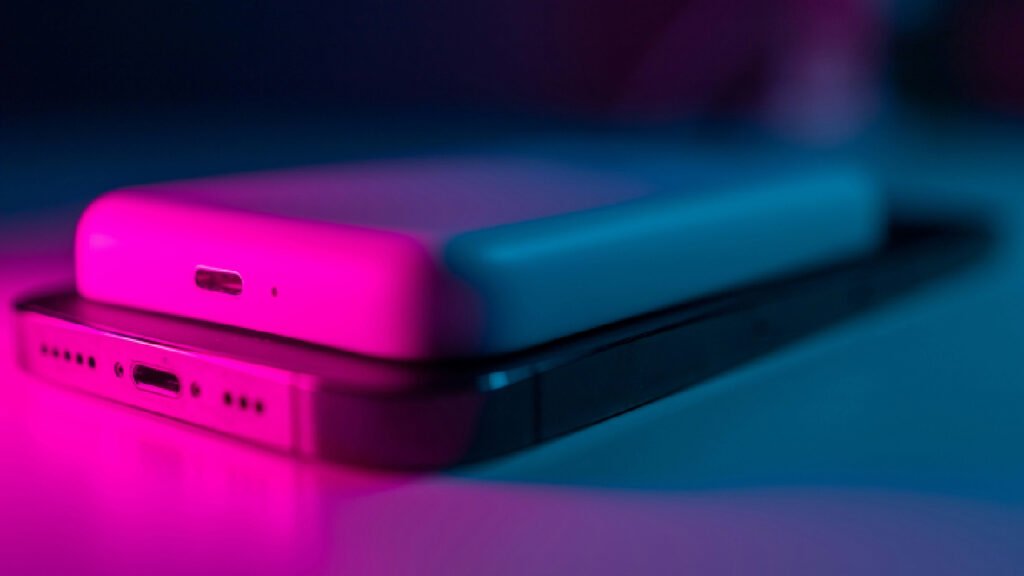
The International Air Transport Association (IATA) says power banks should not be used to provide power to other devices during taxi, take-off or landing.
For many travellers, a power bank is as essential as a wallet. Long commutes, airport waits, delayed flights and heavy phone use can quickly drain a smartphone, making a portable charger a useful companion.
But taking one on a flight comes with important restrictions. Unlike most electronic accessories, a power bank contains a lithium-ion battery capable of storing significant energy in a small space.
While these batteries are generally safe when handled properly, damage, overheating or a short circuit can make them hazardous. A recent power bank fire aboard a KLM Royal Dutch Airlines flight has once again highlighted why airlines impose strict rules on their carriage and use.
According to Dutch media reports, a passenger’s power bank, which was being charged in the business-class cabin of a KLM flight from Amsterdam to Curacao, suddenly caught fire. The captain later decided to turn the aircraft around and return to the airport.
The concern with lithium-ion batteries is a phenomenon known as thermal runaway, in which a battery can rapidly overheat and potentially catch fire. This is why airlines have specific rules governing where power banks can be kept and how they can be used during a flight.
The International Air Transport Association (IATA) says power banks should not be used to provide power to other devices during taxi, take-off or landing. It also notes that individual airlines can introduce stricter requirements for safety reasons.
Passengers are also not permitted to charge power banks during a flight. British Airways, for instance, states that aircraft seat power supplies should only be used for personal electronic devices and not for charging power banks.
For carriage, most airlines allow passengers to take up to two power banks on a flight, with each unit limited to 100 watt-hours (Wh). Power banks cannot be placed in checked-in baggage and must instead be carried in hand baggage.
IndiGo states that spare batteries, including lithium batteries, must be carried only in cabin baggage and should be individually protected to prevent short circuits. Aviation guidelines also recommend keeping power banks somewhere easily accessible, such as a seat pocket or the bag stored under the seat in front of the passenger.
Carrying a power bank does not necessarily mean passengers can use it throughout the flight. Several airlines restrict the use of power banks to recharge other devices while onboard.
Akasa Air stresses that power banks must remain inactive during the flight. Air India also warns that passengers may have to dispose of excess power banks at the airport if they do not comply with its rules.
A power bank may be designed to keep passengers connected when their phone battery runs low. On an aircraft, however, carrying it safely and following the airline’s restrictions are essential to keeping everyone on board safe.