
Thanksgiving Dinner Has A Surprising History: 7 Foods That Weren’t Always Holiday Staples
From turkey and cranberry sauce to pumpkin pie and green bean casserole, discover the surprising histories, Indigenous roots, and marketing stories behind 7 classic American Thanksgiving foods
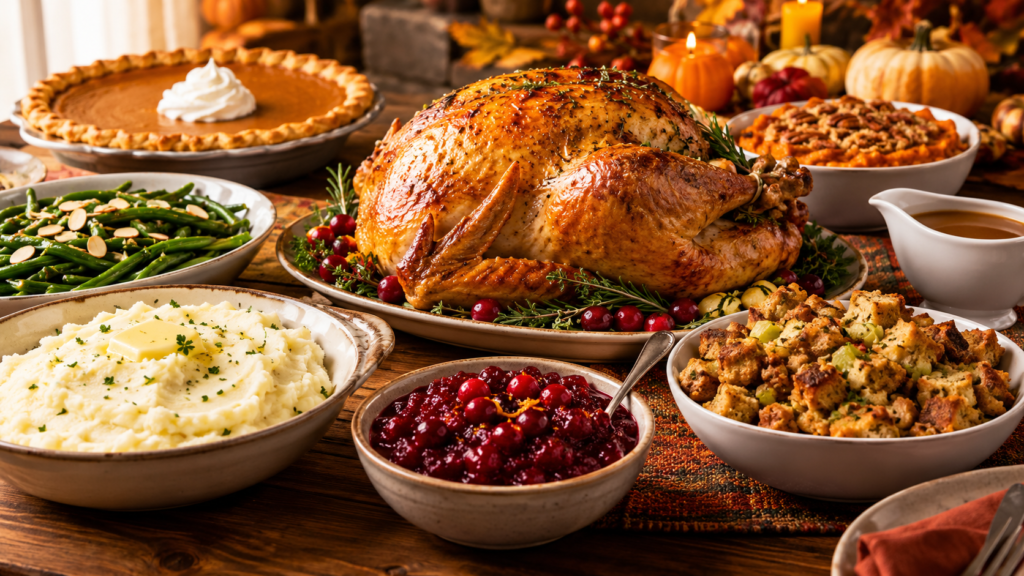
AI generated image
Thanksgiving dinner is one of America’s most recognizable food traditions, with roasted turkey, mashed potatoes, cranberry sauce, stuffing and pumpkin pie taking center stage. But many of these holiday favorites have histories that stretch far beyond the familiar story of the Pilgrims and their feast in 1621.
Some ingredients originated thousands of years ago in the Americas, while others became Thanksgiving staples through changing culinary traditions, popular recipes and clever marketing. The modern Thanksgiving menu also looks very different from the food that historians believe was served at the original harvest gathering in Plymouth, Massachusetts.
According to the Smithsonian Institution and the National Park Service, the Thanksgiving meal Americans know today evolved over several centuries. Here are 10 popular Thanksgiving foods with surprising stories behind them.
1. Turkey: The Bird Was Not Necessarily the Star of the First Thanksgiving
Turkey has become so closely associated with Thanksgiving that the holiday is often called Turkey Day. However, historians cannot confirm that turkey was served at the 1621 harvest celebration shared by English colonists and Wampanoag people in Plymouth.
According to the Smithsonian Magazine, contemporary accounts describe wildfowl, venison and corn among the foods served during the gathering. The wildfowl could have included turkey, but other birds, such as ducks and geese, were also available.
The turkey’s journey to the American dinner table began long before the modern holiday. The Smithsonian Institution reports that turkeys were domesticated in central Mexico approximately 2,000 years ago, with domesticated birds eventually reaching Europe and returning to North America with European settlers.
Turkey became a defining feature of Thanksgiving much later, as the holiday developed into a national tradition during the 19th century.
2. Cranberry Sauce: A Thanksgiving Staple That Came Much Later
Cranberries are native to North America and have a long history of use among Indigenous peoples, who used the berries as food, medicine and dye. However, the sweet cranberry sauce served alongside turkey today was not part of the original Thanksgiving feast.
The Smithsonian Institution explains that European settlers named the fruit “craneberry” because they thought its plant resembled a crane. The name eventually evolved into cranberry.
According to the Smithsonian Magazine, there is no evidence that cranberry sauce was served at the 1621 gathering. A written account of boiling cranberries with sugar into a sauce to accompany meat appeared decades later.
Jellied cranberry sauce emerged in 1912, helping pave the way for the canned cranberry products that became familiar features of American holiday meals.
Today, cranberry sauce remains a popular accompaniment to turkey, offering a sweet and tart contrast to the savory dishes on the Thanksgiving table.
3. Pumpkin Pie: An American Ingredient With European Connections
Pumpkin pie is one of the most recognizable Thanksgiving desserts, but its history involves both Indigenous American agriculture and European cooking traditions.
Pumpkins were cultivated in Central America thousands of years ago and became one of the foods that European explorers brought back across the Atlantic. Pumpkins subsequently entered European food culture, where cooks incorporated them into an established tradition of making sweet and savory pies.
The dessert Americans recognize today developed over time. Early European settlers in North America had access to pumpkins but did not necessarily prepare them in the form of a modern pie.
The Smithsonian Magazine notes that pumpkin pie was not served at the 1621 harvest gathering. The colonists lacked essential ingredients for conventional pastry, including the butter and wheat flour needed to make pie crusts.
4. Mashed Potatoes: A Favorite Side Dish With South American Roots
For many American families, Thanksgiving dinner would be incomplete without a bowl of creamy mashed potatoes. Yet the potato originated far from the traditional setting of the Plymouth harvest celebration.
The Smithsonian Institution traces the domestication of potatoes to South America, most likely the region around present-day Peru, approximately 10,000 years ago. Spanish explorers subsequently carried potatoes to Europe, where the crop gradually became an important food source.
European settlers later introduced potatoes to eastern North America.
Despite their popularity today, potatoes were not part of the 1621 Thanksgiving feast, according to historical accounts discussed by the Smithsonian Magazine. Neither white potatoes nor sweet potatoes had become established ingredients in the region’s colonial diet at the time.
Mashed potatoes became part of the broader Thanksgiving menu as American food traditions developed over the following centuries.
Their popularity also reflects the dish’s versatility. Potatoes can be boiled, mashed and combined with butter, milk, cream or other ingredients to create a side dish that complements roasted turkey, gravy and vegetables.
5. Green Bean Casserole: A Modern Classic Created in a Test Kitchen
Unlike turkey and cranberries, green bean casserole does not have centuries of agricultural history behind it as a Thanksgiving dish. Its origins can be traced to a specific person, a commercial kitchen and a recipe designed for home cooks.
According to the Smithsonian Magazine, Dorcas Reilly developed the dish while working in the home economics department of a Campbell’s test kitchen in Camden, New Jersey.
The recipe used six affordable ingredients, including green beans and cream of mushroom soup, to create a convenient baked dish. Crispy fried onions became a familiar topping.
The casserole was a practical fit for American households because it relied on readily available ingredients and required relatively little preparation. Its popularity grew as convenience foods became more common in American kitchens.
The Smithsonian Magazine has reported that the dish is served in approximately 20 million US households each Thanksgiving.
Its story illustrates how modern food companies and home economists helped shape Thanksgiving traditions. Not every holiday classic originated in a colonial kitchen or an old family recipe. Some were created to make everyday cooking easier.
6. Sweet Potato Casserole: The Marshmallow Topping Was a Marketing Idea
Sweet potatoes have long been part of American cooking, but the combination of mashed sweet potatoes and toasted marshmallows has a much more recent origin.
The unusual pairing became popular partly because a marshmallow manufacturer wanted Americans to use its product in more recipes.
According to Smithsonian Magazine, the Angelus Marshmallows company, which was also associated with the production of Cracker Jack, began mass-producing marshmallows in 1907. A decade later, the company sought to encourage more households to incorporate marshmallows into their cooking.
It approached Janet McKenzie Hill, founder of The Boston Cooking School Magazine, to develop recipes featuring the confection. A cookbook published in 1917 included what is considered the first documented recipe for mashed sweet potatoes baked with a marshmallow topping.
The idea gradually gained popularity, and sweet potato casserole became a familiar Thanksgiving side dish. The recipe’s history demonstrates how advertising and food companies can influence what Americans consider traditional holiday cooking.
Sweet potatoes themselves have a much older history in the Americas. However, their pairing with a sugary marshmallow topping is a product of modern American food culture rather than an ancient Thanksgiving custom.
7. Apple Pie: A Thanksgiving Favorite That Predates the United States
Apple pie is often associated with American identity, but its history stretches back to Europe.
According to Boston University, Thanksgiving menus have evolved over the centuries to include several varieties of pie, including apple, pecan and pumpkin. The development of these desserts reflects a combination of culinary traditions and ingredients that became available in North America.
The broader history of apple pie is not exclusively American. European cooks were making apple-filled pastries long before the United States became an independent country.
Apples also have a complicated agricultural history in North America. Although crabapples are native to the continent, many of the familiar cultivated apple varieties grown in the United States today descend from apples introduced from Eurasia.
As European settlers established orchards and baking traditions developed, apple pies became a familiar dessert in American households.
The dish eventually acquired a cultural significance that extended beyond the dinner table. Apple pie became closely associated with American identity, helping explain why it is frequently linked to national celebrations and family gatherings.
Although pumpkin pie often receives more attention during Thanksgiving, apple pie remains a popular alternative for households looking to serve a dessert with a different flavor and texture.
Its presence on holiday tables also demonstrates how American food traditions incorporate influences from different parts of the world.